


We need to act fast on PFAS water contamination in Minnesota. Marin & Murphy emphasize the urgency for public awareness of the dangers and immediate action. Protecting public health is crucial as harmful chemicals threaten our water. EPA regulations have been passed but are not scheduled to be enforced until as late as 2030. Risks to human health, including increased rates of types of cancer (kidney cancer, testicular cancer, thyroid cancer) as well as other serious health problems (ulcerative colitis, thyroid disease, preeclampsia) persist, so awareness and mitigation efforts are vital. Contamination stems from various sources like industrial activities and firefighting foam. The Minnesota Pollution Control Agency has created a first of it's kind Minnesota PFAS Blueprint which is a strategic, coordinated approach developed by multiple state agencies to protect families and communities from PFAS. Staying informed of the risks of PFAS exposure and taking decisive steps ensures access to clean, safe water statewide. Additionally, we encourage those that have been harmed by PFAS water contamination to seek out experienced Minnesota PFAS cancer lawyers pursue claims against the manufacturers of these harmful forever chemicals.
Minnesota PFAS Water Contamination Map
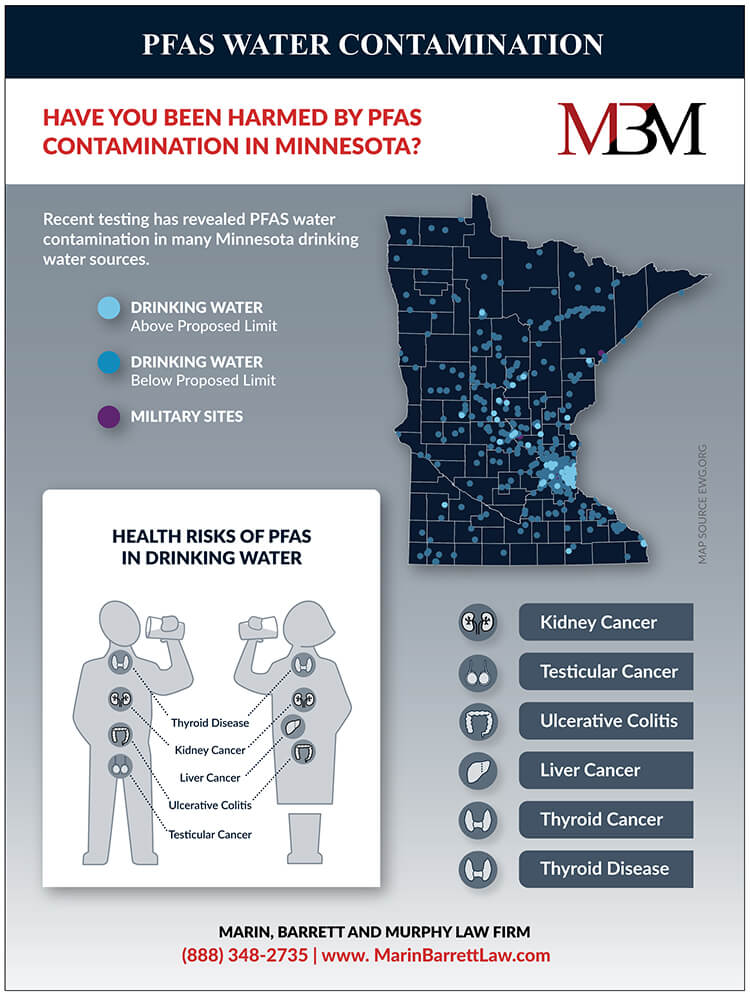
Minnesota PFAS Water Contamination Map & Cancer Risk Infographic
Information on PFAS Contamination in Drinking Water
When addressing PFAS water contamination, it’s crucial to understand the potential risks these harmful chemicals pose to public health and the environment. PFAS substances, part of the PFAS group of human-made chemicals, have been a significant concern due to their persistence in the environment and adverse effects on water quality.
The Environmental Protection Agency (EPA) has identified PFAS water contamination as a pressing issue. To educate the public on the risks associated with these substances, the EPA provides resources such as the PFAS fact sheet.
The Biden-Harris administration has promised increased efforts to address PFAS contamination, safeguarding water sources and protecting human health and the environment from the harmful effects of these chemicals. There is overwhelming evidence showing how PFAS is cancer-causing, such as kidney cancer, testicular cancer, and ulcerative colitis.
How to Deal with PFAS in your Drinking Water
Dealing with PFAS in drinking water requires immediate action to safeguard public health and prevent further contamination. PFAS, or per- and polyfluoroalkyl substances, are a group of harmful chemicals that have been detected in drinking water sources across the country.
The Environmental Protection Agency (EPA) has set drinking water standards for some PFAS to protect human health. It’s crucial to monitor and test water sources for these substances regularly. If elevated levels are found, appropriate treatment methods must be implemented to remove or reduce PFAS contamination.
Public education on the risks associated with PFAS and drinking water is also essential to ensure the community is proactive in addressing this issue.
Per- and Poly-Fluoroalkyl Substances (PFAS) in Minnesota
Exploring the effects of per- and polyfluoroalkyl substances (PFAS) on water quality reveals significant public health and environmental safety concerns. Commonly found in drinking water sources due to industrial and firefighting foam runoff, PFAS poses substantial health risks—their ability to persist in the environment and groundwater results in prolonged ecological impacts. Understanding PFAS prevalence in drinking water is vital to effectively reducing exposure and implementing appropriate water treatment methods.
Health Effects of PFAS Exposure
Research into PFAS exposure indicates significant health risks, including developmental delays, decreased fertility, compromised immune responses, and increased cancer risk. The environmental repercussions of PFAS extend beyond human health, impacting ecosystems significantly. Addressing the health impacts of PFAS is crucial for public health strategies and community protection.
PFAS Exposure Linked to Kidney Cancer in Minnesota
Recent research shows a strong connection between PFAS (per- and polyfluoroalkyl substances) exposure and the development of renal cell carcinoma, or kidney cancer. One specific type of PFAS, called perfluorooctanoic acid (PFOA), has been particularly linked to kidney cancer. Numerous epidemiological studies consistently report that high levels of contact with PFOA disrupt cellular processes in the kidneys, potentially leading to malignant transformations. This evidence underscores the dangerous connection between PFAS and kidney cancer.
On January 26th, 2024 in a significant health alert, the Centers for Disease Control and Prevention (CDC) has released critical update on PFAS (per- and polyfluoroalkyl substances), with a specific focus on the increased risk of kidney cancer. This development is crucial for individuals considering filing a New Jersey PFAS Kidney Cancer Lawsuit. The CDC’s announcement highlights the need for heightened awareness and medical monitoring for those potentially impacted by PFAS exposure, aligning with the growing concerns related to PFAS and Kidney Cancer.
PFAS Contamination in Minnesota
Minnesota has been significantly impacted by PFAS contamination, particularly in areas near industrial sites and military bases. Groundwater testing in various regions of Minnesota, including areas around the 3M manufacturing plant in Cottage Grove and military installations, has revealed PFAS levels exceeding the safety thresholds set by the Environmental Protection Agency (EPA). These contaminants have been found in public water systems serving thousands of residents across the state.
Kidney Cancer Statistics in Minnesota
Kidney cancer is a significant health concern in Minnesota. According to the Minnesota Cancer Alliance, the state has seen an increase in kidney cancer incidence rates over the past few decades. The incidence of kidney cancer in Minnesota mirrors national trends, with a higher prevalence among older individuals. The median age range for kidney cancer diagnosis in Minnesota is 65-69 years, with men being twice as likely to develop kidney cancer compared to women.
If you have been diagnosed with kidney cancer and reside in Minnesota, long-term exposure to PFAS chemicals in your drinking water might be a contributing factor. All PFAS water contamination lawsuits have been centralized in Federal Court in Charleston, South Carolina. To pursue a claim, it is crucial to hire an experienced water contamination injury attorney. They can help determine if your kidney cancer diagnosis is linked to PFAS exposure and guide you through the legal process to seek compensation for your health issues by filing a Minnesota PFAS kidney cancer lawsuit.
For more detailed information and to seek legal assistance, it is recommended to contact law firms experienced in environmental contamination cases. They can help determine if your kidney cancer diagnosis is linked to PFAS exposure and guide you through the process of filing a lawsuit to seek compensation for your health issues.
PFAS Exposure Linked to Testicular Cancer in Minnesota
Emerging research suggests a troubling connection between exposure to PFAS (per- and polyfluoroalkyl substances) and an increased risk of developing testicular cancer. These “forever chemicals,” known for their persistence in the environment, have been linked to testicular cancer, highlighting a pressing public health issue.
Testicular Cancer Statistics in Minnesota
Testicular cancer is a notable health concern in Minnesota. According to the Minnesota Cancer Reporting System, there were approximately 150 new cases of testicular cancer diagnosed in Minnesota in recent years. The incidence of testicular cancer is generally higher in younger men, particularly those aged between 15 and 44 years. Minnesota’s diverse population and extensive industrial activities may contribute to the varying exposure levels and related health outcomes.
Military Bases and PFAS Contamination
Military bases in Minnesota, such as the Duluth Air National Guard Base and Minneapolis-Saint Paul Joint Air Reserve Station, have been under scrutiny due to studies linking PFAS chemicals to testicular cancer among service members and surrounding civilians. The use of firefighting foams containing PFAS on these bases has been a significant source of groundwater contamination, affecting both military personnel and nearby residents.
If you have been diagnosed with testicular cancer and reside in Minnesota, long-term exposure to PFAS chemicals in your drinking water might be a contributing factor. All PFAS water contamination lawsuits have been centralized in Federal Court in Charleston, South Carolina. To pursue a claim effectively, it is essential to hire an experienced water contamination injury attorney. They can help determine if your testicular cancer diagnosis is linked to PFAS exposure and guide you through the legal process to seek compensation for your health issues by filing a Minnesota PFAS testicular cancer lawsuit.
PFAS Exposure Linked to Ulcerative Colitis in Minnesota
Recent studies have suggested a potential association between PFAS (per- and polyfluoroalkyl substances) exposure and an increased risk of developing ulcerative colitis. PFAS are synthetic chemicals found in various household products and industrial applications. While more research is needed to fully understand the connection, these preliminary findings are particularly relevant for those who may be at risk in Minnesota.
Key Points to Consider:
Immune System Impact: Scientific studies strongly suggest that exposure to PFAS can disrupt the immune system’s normal functioning, rendering it less effective. This disruption increases susceptibility to diseases like ulcerative colitis and raises concerns about long-term health complications.
Inflammation Trigger: PFAS chemicals have been identified as instigators of inflammation within the human body. This inflammatory response plays a pivotal role in the development and progression of ulcerative colitis.
Long-term Effects: Prolonged exposure to PFAS may lead to chronic immune dysregulation, further exacerbating the risk of developing or worsening ulcerative colitis.
Ulcerative Colitis in Minnesota
In Minnesota, the incidence of ulcerative colitis has mirrored national trends in the United States, showing an upward trend over the past few decades. The prevalence and incidence rates for ulcerative colitis, a form of inflammatory bowel disease (IBD), have been increasing due to better diagnostic practices, greater awareness, and possibly environmental factors. On average, the incidence rate for ulcerative colitis in the U.S. is about 12 to 20 new cases per 100,000 people each year.
If you have been diagnosed with ulcerative colitis and reside in Minnesota, long-term exposure to PFAS chemicals in your drinking water might be a contributing factor. All PFAS water contamination lawsuits have been centralized in Federal Court in Charleston, South Carolina. To pursue a claim effectively, it is crucial to hire an experienced water contamination injury attorney. They can help determine if your ulcerative colitis diagnosis is linked to PFAS exposure and guide you through the legal process to seek compensation for your health issues by filing a Minnesota PFAS ulcerative colitis lawsuit.
PFAS Exposure Linked to Thyroid Cancer in Minnesota
Several case-control and nested case-control studies have examined the association between PFAS (per- and polyfluoroalkyl substances) exposure and the risk of thyroid disease. The results consistently demonstrate a positive association between elevated levels of specific PFAS, such as perfluorooctanoic acid (PFOA) and perfluorooctane sulfonate (PFOS), and an increased risk of papillary thyroid cancer. Additionally, longitudinal analyses have shown a dose-response relationship, further supporting the detrimental effect of PFAS on thyroid health.
The Impact of PFAS on Thyroid Health
Increased Risk of Thyroid Cancer: Numerous human studies have highlighted the negative impact of PFAS exposure on health, particularly the increased risk of thyroid cancer. These studies have found that PFAS can interfere with thyroid function, leading to a range of health issues, including thyroid cancer.
Developmental and Immune System Effects: Beyond increasing the risk of thyroid cancer, PFAS exposure can cause developmental effects and disrupt the immune system. The persistence of these chemicals in the environment and their ability to accumulate in the human body pose a significant public health concern.
Thyroid Cancer Statistics in Minnesota
Thyroid cancer is a growing health concern in Minnesota. According to the Minnesota Cancer Surveillance System, there has been a noticeable increase in thyroid cancer cases in recent years. Nationally, approximately 44,020 new cases of thyroid cancer were diagnosed in the United States in 2023, with Minnesota contributing a significant number to this figure. Women are particularly affected, being three times more likely to develop thyroid cancer than men, with the average age of diagnosis being around 51 years.
If you have been diagnosed with thyroid cancer and reside in Minnesota, long-term exposure to PFAS chemicals in your drinking water might be a contributing factor. All PFAS water contamination lawsuits have been centralized in Federal Court in Charleston, South Carolina. To pursue a claim effectively, it is crucial to hire an experienced water contamination injury attorney. They can help determine if your thyroid cancer diagnosis is linked to PFAS exposure and guide you through the legal process to seek compensation for your health issues by filing a Minnesota PFAS thyroid cancer lawsuit.
PFAS Exposure Linked to Liver Cancer in Minnesota
Emerging research indicates a concerning connection between exposure to PFAS (per- and polyfluoroalkyl substances) and an increased risk of liver cancer. PFAS, often referred to as “forever chemicals” due to their persistent nature, have been linked to various adverse health outcomes, including liver damage and cancer. These synthetic chemicals, found in numerous consumer products and industrial applications, have infiltrated water supplies, leading to widespread public health concerns.
The Impact of PFAS on Liver Health
Liver Damage and Cancer: PFAS exposure has been shown to cause significant liver damage, which can lead to liver cancer. Studies have demonstrated that these chemicals disrupt normal liver function by interfering with lipid metabolism and inducing oxidative stress, which can cause cellular damage and increase the risk of malignancy. Specific types of PFAS, such as perfluorooctanoic acid (PFOA) and perfluorooctane sulfonate (PFOS), have been particularly associated with liver toxicity and carcinogenesis.
Mechanisms of Liver Carcinogenesis: The carcinogenic potential of PFAS in the liver is attributed to their ability to induce peroxisome proliferation, a process that can lead to hepatocellular carcinoma (HCC), the most common type of liver cancer. The persistent nature of PFAS means that they accumulate in the liver over time, causing chronic inflammation and damage that can eventually result in cancerous growths.
Liver Cancer Statistics in Minnesota
Liver cancer is a significant health concern in Minnesota. According to the Minnesota Cancer Surveillance System, there has been an increase in liver cancer incidence rates over the past few decades. In 2020, there were approximately 1,000 new cases of liver cancer diagnosed in Minnesota, with a significant portion of these cases occurring in areas with known environmental pollution, including PFAS contamination.
If you have been diagnosed with liver cancer and reside in Minnesota, long-term exposure to PFAS chemicals in your drinking water might be a contributing factor. All PFAS water contamination lawsuits have been centralized in Federal Court in Charleston, South Carolina. To pursue a claim effectively, it is crucial to hire an experienced water contamination injury attorney. They can help determine if your liver cancer diagnosis is linked to PFAS exposure and guide you through the legal process to seek compensation for your health issues by filing a Minnesota PFAS liver cancer lawsuit.
PFAS Exposure Linked to Thyroid Disease in Minnesota
Recent studies have demonstrated a significant association between PFAS (per- and polyfluoroalkyl substances) exposure and various thyroid diseases, including hyperthyroidism, hypothyroidism, thyroiditis, Hashimoto’s disease, Graves’ disease, goiter, and thyroid nodules. Often referred to as “forever chemicals” due to their persistence in the environment, PFAS have been shown to interfere with thyroid function, leading to a range of health issues.
The Impact of PFAS on Thyroid Health
Hyperthyroidism and Hypothyroidism: PFAS exposure has been linked to both hyperthyroidism and hypothyroidism. Hyperthyroidism occurs when the thyroid gland produces excessive hormones, leading to symptoms such as weight loss, rapid heartbeat, and nervousness. Conversely, hypothyroidism is characterized by insufficient hormone production, causing fatigue, weight gain, and depression. Studies suggest that PFAS can disrupt the endocrine system, leading to these thyroid dysfunctions.
Thyroiditis and Hashimoto’s Disease: Thyroiditis, an inflammation of the thyroid gland, and Hashimoto’s disease, an autoimmune form of thyroiditis, have also been associated with PFAS exposure. These conditions can cause thyroid gland damage, leading to chronic hypothyroidism. The inflammatory and immune responses triggered by PFAS are believed to play a role in the development of these conditions.
Graves’ Disease and Goiter: Graves’ disease, an autoimmune disorder resulting in hyperthyroidism, and goiter, an abnormal enlargement of the thyroid gland, have been linked to PFAS exposure as well. The disruption of normal thyroid function by PFAS can lead to overactivity of the thyroid gland or its enlargement as it attempts to compensate for hormonal imbalances.
Thyroid Nodules: PFAS exposure has been associated with the development of thyroid nodules, which are abnormal growths within the thyroid gland. While most nodules are benign, some can be precancerous or cancerous, highlighting the importance of monitoring thyroid health in individuals exposed to PFAS.
Minnesota’s Thyroid Disease Statistics
In Minnesota, thyroid diseases are a significant public health concern. According to the Minnesota Cancer Reporting System, there has been an increase in thyroid cancer cases in recent years. In 2023, there were approximately 2,000 new cases of thyroid cancer diagnosed in Minnesota, with women being more frequently diagnosed than men. Women are three times more likely to develop thyroid cancer than men, with the average age of diagnosis being around 51 years.
If you have been diagnosed with a thyroid condition and reside in Minnesota, long-term exposure to PFAS chemicals in your drinking water might be a contributing factor. Legal avenues are available for those affected, and all PFAS water contamination lawsuits have been centralized in Federal Court in Charleston, South Carolina. To pursue a claim effectively, it is crucial to hire an experienced water contamination injury attorney. They can help determine if your thyroid disease diagnosis is linked to PFAS exposure and guide you through the legal process to seek compensation for your health issues by filing a Minnesota PFAS thyroid disease lawsuit.
Drinking Water Contamination in Minnesota
Understanding the impact of PFAS on drinking water quality is paramount in addressing the ongoing issue of water contamination in Minnesota. PFAS, a group of human-made chemicals, poses a significant threat to the environment and public health.
The Environmental Protection Agency recognizes the dangers associated with PFAS contamination, as highlighted in the fact sheet released by the Biden-Harris administration. In Minnesota, the presence of PFAS in drinking water is a major concern, requiring immediate attention and action.
The widespread use of these substances in various products has led to their prevalence in water sources, necessitating rigorous monitoring and remediation efforts to safeguard communities from the harmful effects of PFAS exposure.
Phase 1 Water Providers in Minnesota
During the settlement phase of the PFAS lawsuits brought by drinking water providers, drinking water providers in Minnesota were placed into two categories: Phase 1 providers and Phase 2 providers.
Phase 1 providers were defined as active water systems in the United States that have likely been impacted by PFAS water contamination. The Court identified these Minnesota water providers as likely impacted by PFAS contamination:
- Alexandria
- Altura
- Andover
- Annandale
- Anoka
- Apple Valley
- Appleton
- Austin Mobile Home Park
- Austin Utilities
- Avon
- Babbitt
- Baldwin Lake Estates
- Baxter
- Bay Lake Reserve Development
- Bayport
- Becker
- Bel Clare Estates
- Belle Plaine
- Benton Utilities LLC
- Big Lake
- Blaine
- Bloomington
- Blue Waters Leisure Park
- Bonnevista Terrace Mobile Home Park
- Bowlus
- Braham
- Brainerd
- Brookhaven Development
- Brooklyn Center
- Brooklyn Park
- Brookside Mobile Home Park
- Brownsdale
- Buckman
- Buhl
- Burnsville
- Cannon Falls
- Cedar Grove
- Cedar Terrace Mobile Home Park
- Centerville
- Chanhassen
- Chisago City
- Cimarron Park
- Circle Pines
- Clearwater
- Clearwater Forest Mobile Home Park
- Clearwater Harbor Property, Incorporated
- Cloquet
- Cold Spring
- College of St. Benedict
- Coon Rapids
- Countryside Estates
- Crookston
- Cross Lake Housing Development
- Curtis Flats
- Divine Son Mobile Home Park
- Eagan
- Eagle Bend
- Eagle’s Watch Development
- East Grand Forks
- East Pointe Townhomes
- Edina
- Elgin
- Elk River
- Evergreen Hills Mobile Home Park
- Excelsior
- Faribault
- Farmington
- Fischers Garden Mobile Home Park
- Five Star Mobile Home Park
- Foley
- Foreston
- Fridley
- Fridley Terrace Mobile Home Park
- Goodhue
- Grand Rapids
- Grey Eagle
- Grove Place Apartments
- Hampton
- Hastings
- Hiawatha Estates, Subds. I, II & III
- Hibbing
- Hidden Valley Mobile Home Park
- Hilltop Water Company
- Hinckley
- Holdingford
- Hopkins
- Hoyt Lakes
- Hugo
- Inver Grove Heights
- Ironton
- Isanti
- Isanti Estates
- Kasota
- Kellogg
- Kimball
- Kinney
- Lake Andrew Development
- Lake City
- Lakeville
- Lexington Riverside Condominium
- Lino Lakes
- Litchfield
- Little Falls
- Littlefork
- Long Prairie
- Luverne
- Madison Lake
- Mahtomedi
- Maple Grove
- Marshall
- McGregor
- Melrose
- Milaca
- Milan
- Mille Lacs Island Resort
- Millville
- Minneapolis
- Minnesota Veterans Home
- Minnetonka
- Minnetonka Beach
- MN Correctional Facility – Faribault
- MN Correctional Facility – Togo
- Mobile Manor Mobile Home Park
- Monticello
- Moorhead
- Mora
- Morton
- Mounds View
- Nashwauk
- Nerstrand
- New Brighton
- New Munich
- New Trier
- New York Mills
- North Saint Paul
- Northfield
- Oak Grove
- Oak Park Heights
- Ogilvie
- Onamia
- Orr
- Otsego
- Paynesville
- Pease
- Perham
- Pine City
- Pine Land Mobile Home Park (Carda’s)
- Pine River
- Pine Village, Inc.
- Pines Mobile Estates
- Pipestone
- Plainview
- Plymouth
- Princeton
- Queen Anne Court
- Ramsey
- Randall
- Renville
- Rice
- Rich Prairie Sewer and Water District
- Richfield
- Richmond
- Robbinsdale
- Rochester
- Rockford
- Rockville
- Rockwood Estates
- Rogers
- Rollingstone
- Roosevelt Court
- Rosemount
- Rush City
- Saint Anthony Village
- Saint John’s University
- Saint Louis Park
- Saint Martin
- Saint Paul Regional Water Services
- Sartell
- Sauk Centre
- Sauk Rapids
- Savage
- Shady Oaks Mobile Home Park
- Shakopee
- Shores of Eagle Lake
- Shoreview
- Shorewood
- South Cedar Shores Mobile Home Park
- South Saint Paul
- Southridge Mobile Home Park
- Spring Park
- Springfield
- Stillwater
- Stonebrooke Addition I
- Stonegate Co-op, Inc.
- Supreme Mobile Home Park
- Swanville
- Taylors Falls
- Terrace Heights MHP LLC
- The Meadows
- Town and Country Mobile Home Park
- Upsala
- Vadnais Heights
- Valley Mobile Home Park
- Vermillion
- Wabasha
- Wadena
- Waite Park
- Watertown
- Wayzata
- Westbrook Estates
- White Bear Lake
- White Bear Township
- Willmar
- Willows of Ham Lake
- Winsted
- Worthington
- Zimmerman
- Zumbro Falls
- Zumbrota
Phase 2 Water Providers in Minnesota
Phase 2 providers were defined as active water systems in the United States that could been impacted by PFAS water contamination. These providers, at the time of the settlement, may not have had ever tested for PFAS or have had not detected PFAS in their drinking water. The Court identified these Minnesota Phase 2 water providers, which may impacted by PFAS contamination in the future, as the following:
- Albert Lea
- Arden Hills
- Breckenridge
- Buffalo
- Byron
- Cambridge
- Carver
- Champlin
- Chaska
- Chisholm
- Columbia Heights
- Crystal
- Dayton
- Delano Municipal Utilities
- Detroit Lakes
- Dilworth
- Duluth
- Eden Prairie
- Elko New Market
- Ely
- Eveleth
- Fairmont
- Fergus Falls
- Forest Lake
- Glencoe
- Golden Valley
- Goodview
- Hermantown
- Hutchinson
- International Falls
- Joint Powers Water Board
- Jordan
- Kasson
- LaCrescent
- LeSueur
- Lincoln-Pipestone Rural Water System
- Lindstrom
- Little Canada
- Lonsdale
- Mankato
- Medina
- Minnetrista
- Montevideo
- Montrose
- Morris
- Mound
- New Hope
- New Prague
- New Ulm
- North Branch
- North Mankato
- Norwood-Young America
- Owatonna
- Park Rapids
- Pine Island
- Prior Lake
- Red Rock Rural Water System
- Red Wing
- Redwood Falls
- Roseville
- Saint Charles
- Saint Cloud
- Saint Francis
- Saint James
- Saint Joseph
- Saint Peter
- Sleepy Eye
- Spring Lake Park
- Stewartville
- Thief River Falls
- Two Harbors
- Victoria
- Virginia
- Waconia
- Waseca
- Windom
- Winona
- Woodbury
- Wyoming
MINNESOTA PFAS LAWSUIT: STATE TAKES ACTION AGAINST MANUFACTURERS OVER WATER CONTAMINATION
In 2018, Minnesota settled its lawsuit against 3M for $850 million, addressing the extensive PFAS contamination caused by the company in the Twin Cities Metropolitan Area. Filed by Minnesota’s Attorney General in 2010, the lawsuit alleged that 3M’s chemical production significantly damaged drinking water and natural resources.
The settlement, after legal expenses, allocates approximately $720 million for projects to ensure safe drinking water and enhance natural resources. These projects are overseen by the Minnesota Pollution Control Agency (MPCA) and the Minnesota Department of Natural Resources (DNR). The primary goal is to provide a clean, sustainable water supply and improve aquatic resources, wildlife habitats, and recreational opportunities in the affected areas.
For more details, you can visit the Minnesota 3M PFAS Settlement page.
Frequently Asked Questions
How Can Individuals Determine if Their Drinking Water Is Contaminated With PFAS?
We can determine if our drinking water is contaminated with PFAS by requesting water tests from local authorities or private labs. Ensuring water safety is crucial for our health and well-being, and testing is a proactive step we can take.
Are any support groups or resources available for those Affected by PFAS water contamination in Minnesota?
Yes, support groups and resources are available for those impacted by PFAS water contamination in Minnesota. For assistance and information, we can connect affected individuals with local organizations, government agencies, and online communities.
What Steps Can Communities Take to Prevent Further PFAS Contamination in Their Water Sources?
We can work together to prevent further PFAS contamination in water sources by implementing strict regulations, regularly monitoring, educating the community on safe disposal practices, and holding polluters accountable. Let’s take action now.
How Can Individuals Advocate for Stricter Regulations on PFAS Chemicals to Prevent Future Water Contamination Incidents?
We advocate for stricter regulations on PFAS chemicals to prevent future water contamination incidents. We engage with policymakers, raise community awareness, and support legislation for better oversight. Together, we can safeguard our water sources for future generations.
Marin & Murphy Law Firm
Together, we must continue to fight against PFAS water contamination in Minnesota. By holding accountable those responsible and advocating for clean water standards, we can protect our communities from the harmful effects of these toxic chemicals.
Let’s stand united in our mission to ensure a safer, healthier future for all Minnesota residents. Join us in our efforts to address this pressing environmental issue and create a cleaner, more sustainable environment for future generations.
About the Author: PFAS Lawyer Matthew Marin
 Attorney Matthew Marin is a seasoned legal professional with a deep commitment to environmental justice and client advocacy, particularly in cases involving water contamination. A graduate of Roger Williams University School of Law, Matthew has been practicing law since 2008, focusing on environmental law and personal injury cases. With over 15 years of experience, he has honed his skills in litigating complex cases related to water quality and safety, earning a reputation for meticulous case preparation and tenacious representation. Matthew has successfully handled numerous cases involving PFAS in water supplies, securing favorable outcomes for his clients and contributing to the remediation of drinking water. His approach is characterized by thorough research, strategic planning, and a relentless pursuit of justice. Known for his compassionate approach, Matthew takes the time to understand each client’s unique situation, ensuring they feel heard and supported throughout the legal process. As member of the American Association for Justice and the National Trial lawyers, Matthew’s extensive knowledge and experience inform his work on the legal aspects of the AFFF & PFAS MDL litigation, water contamination, and environmental protection.
Marin & Murphy Law Firm is not currently accepting new PFAS claims. This page is general information about water quality and public health, not legal advice, and reading it or contacting the firm does not create an attorney-client relationship. The firm is licensed in South Carolina, Rhode Island, Massachusetts and Connecticut; its PFAS matters are handled with co-counsel who maintain local counsel arrangements nationwide. Matthew T. Marin, SC Bar #102771, 997 Morrison Drive, Suite 200, Charleston, SC 29403.
Other litigation affecting Minnesota residents: Marin & Murphy Law Firm is not currently accepting new PFAS claims, but is actively accepting cases in the Minnesota spinal cord stimulator lawsuit and the Minnesota Ozempic lawsuit.