


We've all heard about the dangers of PFAS water contamination, but what do we know about it? Marin & Murphy's has reviewed the recent scientific research that has shed light on this pervasive issue, revealing these artificial chemicals' alarming health effects and environmental impact. As we explore their findings, we'll uncover the urgent need for action and the steps to protect ourselves and our communities from this invisible threat. But first, let's take a closer look at what PFAS are and how they've infiltrated our water sources.
These ‘forever chemicals’ can accumulate and have long-term impacts as these compounds have been linked to cancers including kidney cancer and testicular cancer, thyroid disease, ulcerative colitis, as well as other health hazards. The Environmental Protection Agency (EPA) has set standards, yet the need for regulation is persistent. Caution in water consumption is advised. The situation requires proactive measures to mitigate risks effectively. Continued awareness of the issue is vital for necessary action. Staying informed and taking decisive steps ensures access to clean, safe water statewide. Additionally, we encourage those that have been harmed by PFAS water contamination to seek out experienced Alaska PFAS cancer lawyers pursue claims against the manufacturers of these harmful forever chemicals.
Alaska PFAS Water Contamination Map
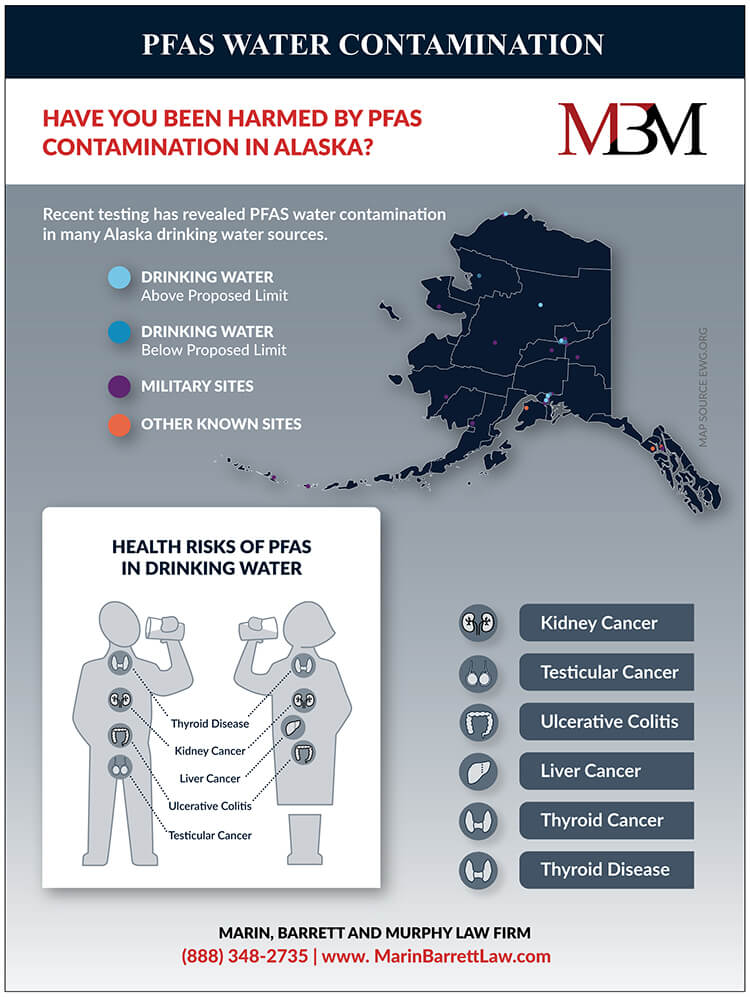
Alaska PFAS Water Contamination Map & Cancer Risk Infographic
Recent Developments in Alaska PFAS Lawsuits
Update: November 4th, 2024 Alaska PFAS Lawsuit Filed
A recently filed lawsuit brings attention to the dangers of PFAS contamination in Alaska’s drinking water. Often called “forever chemicals,” PFAS have been linked to severe health conditions, and Anchorage resident Ina C. is seeking justice after being exposed to these toxic substances through her municipal water supply. Click to view the official Alaska PFAS lawsuit complaint filed by Ina C. against major chemical manufacturers [PDF of Alaska PFAS Lawsuit].
Ina C.’s Case
- Who: Ina C., a resident of Anchorage, Alaska
- Health Impact: Diagnosed with kidney cancer in 2017, Ina C. has undergone extensive medical treatment and continues to experience severe personal injuries, emotional distress, and ongoing health challenges, including the fear of cancer recurrence. She has also suffered financial losses due to significant medical expenses and lost wages.
- Source of Exposure: Ina C. consumed water from the Municipality of Anchorage, which has been found to contain PFAS chemicals through publicly available testing results.
PFAS Contamination in Alaska
PFAS contamination poses a significant threat to Alaska residents, particularly those relying on municipal water systems. In Anchorage, publicly available PFAS testing has confirmed the presence of these dangerous chemicals in the water supply. PFAS, known for their persistence in the environment and ability to accumulate in the human body, are linked to long-term health risks, including cancer and chronic illnesses.
Defendants and Their Alleged Negligence
The lawsuit names multiple major corporations, including:
- 3M Company
- DuPont de Nemours Inc.
- The Chemours Company
- BASF Corporation
- Tyco Fire Products
These companies are accused of:
- Manufacturing and distributing PFAS-laden products, including Aqueous Film-Forming Foam (AFFF), which led to contamination.
- Failing to provide adequate warnings about the toxic and bioaccumulative nature of PFAS chemicals.
- Allowing PFAS to infiltrate public water systems, endangering residents’ health.
The Fight for Accountability in Alaska
This lawsuit highlights the urgent need to address PFAS contamination in Alaska. It underscores the dangers these chemicals pose to public health and the responsibility of corporations to protect communities from environmental harm. Residents of Anchorage and other areas in Alaska may face similar risks from PFAS exposure, raising the importance of taking legal action to hold these corporations accountable.
Take Action: Protect Your Health and Rights
If you or someone you know in Alaska has been affected by PFAS-contaminated water, you may be entitled to compensation.
How to Deal with PFAS in Your Drinking Water
Our Law Firm is committed to helping clients deal with the devastating effects of PFAS contamination in their drinking water. PFAS water contamination is a serious issue that can lead to severe health effects and public health concerns.
Take action immediately if you suspect high PFAS levels in your drinking water. We recommend testing your water for PFAS and other contaminants to determine the extent of the contamination. If the results show elevated PFAS levels, consider installing a drinking water treatment system to remove these harmful chemicals.
Information on PFAS Contamination in Drinking Water
PFAS, or per and poly-fluoroalkyl substances, are a group of artificial chemicals linked to severe health issues when they contaminate drinking water supplies. These ‘forever chemicals’ are highly persistent in the environment and can accumulate in the human body over time. PFAS water contamination is a growing concern, as these chemicals have been detected in public water systems and private wells nationwide.
Exposure to PFAS-contaminated water has been associated with various health problems, including certain types of cancer, thyroid disorders, and developmental issues in children. To protect public health, communities must monitor their water quality and take action to address PFAS contamination.
We’re committed to helping those affected by this issue seek justice. There is overwhelming evidence showing how PFAS is cancer-causing, such as kidney cancer, testicular cancer, and ulcerative colitis.
Per- and Poly-Fluoroalkyl Substances (PFAS) in Alaska
We’re dealing with synthetic chemicals known as per- and polyfluoroalkyl substances, or PFAS. These contaminants have entered water systems, leading to PFAS-contaminated water that poses health risks.
The Environmental Protection Agency is taking steps to regulate these chemicals, but the science around PFAS is still evolving. What we do know is that exposure to these poly-fluoroalkyl substances can lead to serious health problems. If you suspect your water has been contaminated with PFAS, it’s crucial to have it tested and take appropriate action. We’re here to help navigate the complex world of PFAS contamination and protect your rights.
Feel free to reach out if you have concerns about the safety of your water.
Health Effects of PFAS Exposure
Exposure to these harmful chemicals can lead to serious health issues that impact various systems in the body. Studies have linked PFAS water contamination to kidney and testicular cancer, thyroid disease, high cholesterol, and other concerning health effects.
When PFOA and PFOS, two common types of PFAS, contaminate drinking water sources, they can accumulate in the body over time due to their resistance to breaking down. The Environmental Protection Agency has acknowledged the toxicity of these substances and set health advisory levels. However, many argue that these levels are still too high to protect public health adequately.
As the evidence of PFAS’ harmful effects mounts, it’s crucial to hold polluters accountable for the damage they’ve caused.
PFAS Exposure Linked to Kidney Cancer in Alaska
Recent research has shown a strong connection between PFAS (per- and polyfluoroalkyl substances) exposure and renal cell carcinoma, or kidney cancer. Specifically, perfluorooctanoic acid (PFOA), a type of PFAS, has been linked to kidney cancer. Numerous epidemiological studies have consistently reported that high levels of contact with PFOA disrupt cellular processes in the kidneys, potentially leading to malignant transformations. This evidence highlights the dangerous connection between PFAS and kidney cancer.
Health Alert and CDC Update
On January 26th, 2024, the Centers for Disease Control and Prevention (CDC) released a critical update on PFAS, focusing on the increased risk of kidney cancer. This development is crucial for individuals considering filing a PFAS kidney cancer lawsuit. The CDC’s announcement emphasizes the need for heightened awareness and medical monitoring for those potentially impacted by PFAS exposure, aligning with the growing concerns related to PFAS and kidney cancer.
Alaska’s Kidney Cancer Statistics
In Alaska, kidney cancer is a significant health concern. According to the Alaska Department of Health and Social Services, the state has seen a rise in kidney cancer incidence over recent years. Kidney cancer is more common among older individuals, with the median age range for diagnosis being 65-69. Approximately 63% of all cases are diagnosed between the ages of 55-79, and kidney cancer is more prevalent in men, with incidence and mortality rates nearly twice as high as in women. Each year, Alaska records numerous new cases of kidney cancer, reflecting broader national trends.
PFAS Contamination in Alaska
Alaska has experienced significant PFAS contamination, particularly in areas near military bases and industrial sites. For instance, Eielson Air Force Base and Fairbanks International Airport have reported elevated levels of PFAS in water supplies. This contamination poses a risk to both military personnel and nearby residents, contributing to health concerns such as kidney cancer.
Legal and Health Actions
If you have been diagnosed with kidney cancer and reside in Alaska, long-term exposure to PFAS chemicals in your drinking water might be a contributing factor. All PFAS water contamination lawsuits have been centralized in Federal Court in Charleston, South Carolina. To pursue a claim effectively, it is crucial to hire an experienced water contamination injury attorney to represent you and assist you in filing an Alaska PFAS kidney cancer lawsuit.
Next Steps
- Consult a Healthcare Provider: Regular medical check-ups and monitoring are essential for early detection and management of potential health issues related to PFAS exposure.
- Test Your Water: Ensure your drinking water is free from PFAS contamination by having it professionally tested.
- Legal Consultation: Contact a lawyer experienced in environmental contamination cases to explore your legal options and potentially file a lawsuit.
Resources
- Alaska Department of Public Health: Alaska DPH
- Centers for Disease Control and Prevention (CDC): CDC PFAS Information
- Environmental Working Group (EWG): EWG PFAS Information
For further information and legal assistance, you can contact law firms experienced in environmental contamination cases. They can help determine if your kidney cancer diagnosis is linked to PFAS exposure and guide you through the process of seeking compensation for your health issues.
PFAS Exposure Linked to Testicular Cancer in Alaska
Emerging research suggests a concerning connection between PFAS (per- and polyfluoroalkyl substances) exposure and an increased risk of developing testicular cancer. A major study links PFAS, often referred to as “forever chemicals” due to their persistence in the environment, to testicular cancer, highlighting a significant public health issue.
The Impact of PFAS in Alaska
PFAS substances, notorious for their use in firefighting foams and various consumer products, have infiltrated water supplies throughout Alaska. This raises significant concerns about widespread exposure. Military bases in Alaska, such as Eielson Air Force Base and Fairbanks International Airport, have faced scrutiny due to studies linking PFAS chemicals to testicular cancer among service members and surrounding civilians.
Alaska’s Testicular Cancer Statistics
In Alaska, testicular cancer is a significant concern, particularly in areas near military installations where PFAS contamination is prevalent. According to the Alaska Department of Health and Social Services, the state records a substantial number of testicular cancer cases annually. Testicular cancer primarily affects younger men, with the highest incidence rates in those aged 20-34.
Legal and Health Actions
If you have been diagnosed with testicular cancer and reside in Alaska, long-term exposure to PFAS chemicals in your local drinking water might be a contributing factor. All PFAS water contamination lawsuits have been centralized in Federal Court in Charleston, South Carolina. To effectively pursue a claim, it is crucial to hire an experienced water contamination injury attorney to represent you and assist you in filing an Alaska PFAS testicular cancer lawsuit.
PFAS Exposure Linked to Ulcerative Colitis in Alaska
Recent studies have suggested a potential association between PFAS (per- and polyfluoroalkyl substances) exposure and an increased risk of developing ulcerative colitis. PFAS are synthetic chemicals found in various household products and industrial applications. While more research is needed to fully understand the connection, these preliminary findings are crucial for those who may be at risk.
Key Points to Consider
Immune System Impact: Scientific studies strongly suggest that exposure to PFAS can disrupt the immune system’s normal functioning, making it less effective. This disruption not only heightens susceptibility to diseases like ulcerative colitis but also raises concerns about long-term health complications.
Inflammation Trigger: PFAS chemicals have been identified as triggers of inflammation within the human body. This inflammatory response plays a pivotal role in the development and progression of ulcerative colitis.
Long-term Effects: Prolonged exposure to PFAS may lead to chronic immune dysregulation, further exacerbating the risk of developing or worsening ulcerative colitis.
Alaska’s Ulcerative Colitis Statistics
In Alaska, the incidence of ulcerative colitis has mirrored national trends, showing an upward trend over the past few decades. The prevalence and incidence rates for ulcerative colitis, a form of inflammatory bowel disease (IBD), have been increasing due to better diagnostic practices, greater awareness, and potentially environmental factors such as PFAS contamination. On average, the incidence rate for ulcerative colitis in the U.S. is about 12 to 20 new cases per 100,000 people each year.
Legal and Health Actions
If you have been diagnosed with ulcerative colitis and reside in Alaska, long-term exposure to PFAS chemicals in your drinking water might be a contributing factor. All PFAS water contamination lawsuits have been centralized in Federal Court in Charleston, South Carolina. To pursue a claim effectively, it is essential to hire an experienced water contamination injury attorney to represent you and assist you in filing an Alaska PFAS ulcerative colitis lawsuit.
PFAS Exposure Linked to Thyroid Cancer in Alaska
Several case-control and nested case-control studies have examined the association between PFAS (per- and polyfluoroalkyl substances) exposure and the risk of thyroid disease. The results consistently demonstrate a positive association between elevated levels of specific PFAS, such as perfluorooctanoic acid (PFOA) and perfluorooctane sulfonate (PFOS), and an increased risk of papillary thyroid cancer. Longitudinal analyses have shown a dose-response relationship, further supporting the detrimental effects of PFAS on thyroid health.
These human studies highlight the significant health risks posed by PFAS exposure. Whether it’s increasing the risk of thyroid cancer, causing developmental effects, or various other negative health impacts, PFAS pose a real threat to human health.
The Impact of PFAS on Thyroid Health
Hyperthyroidism and Hypothyroidism: PFAS exposure has been linked to both hyperthyroidism and hypothyroidism. Hyperthyroidism occurs when the thyroid gland produces excessive hormones, leading to symptoms such as weight loss, rapid heartbeat, and nervousness. Conversely, hypothyroidism is characterized by insufficient hormone production, causing fatigue, weight gain, and depression. Studies suggest that PFAS can disrupt the endocrine system, leading to these thyroid dysfunctions.
Thyroiditis and Hashimoto’s Disease: Thyroiditis, an inflammation of the thyroid gland, and Hashimoto’s disease, an autoimmune form of thyroiditis, have also been associated with PFAS exposure. These conditions can cause thyroid gland damage, leading to chronic hypothyroidism. The inflammatory and immune responses triggered by PFAS are believed to play a role in the development of these conditions.
Graves’ Disease and Goiter: Graves’ disease, an autoimmune disorder resulting in hyperthyroidism, and goiter, an abnormal enlargement of the thyroid gland, have been linked to PFAS exposure as well. The disruption of normal thyroid function by PFAS can lead to overactivity of the thyroid gland or its enlargement as it attempts to compensate for hormonal imbalances.
Thyroid Nodules: PFAS exposure has been associated with the development of thyroid nodules, which are abnormal growths within the thyroid gland. While most nodules are benign, some can be precancerous or cancerous, highlighting the importance of monitoring thyroid health in individuals exposed to PFAS.
Alaska’s Thyroid Disease Statistics
In Alaska, thyroid diseases are a significant public health concern. According to the Alaska Department of Health and Social Services, there has been a notable increase in thyroid cancer cases. The rates of thyroid diseases have been particularly concerning in areas near industrial sites and military bases, such as Eielson Air Force Base and Fairbanks International Airport, where PFAS contamination levels have been higher.
Legal and Health Actions
If you have been diagnosed with thyroid cancer and reside in Alaska, long-term exposure to PFAS chemicals in your drinking water might be a contributing factor. All PFAS water contamination lawsuits have been centralized in Federal Court in Charleston, South Carolina. To pursue a claim effectively, it is crucial to hire an experienced water contamination injury attorney to represent you and assist you in filing an Alaska PFAS thyroid cancer lawsuit.
PFAS Exposure Linked to Liver Cancer in Alaska
Emerging research indicates a concerning connection between exposure to PFAS (per- and polyfluoroalkyl substances) and an increased risk of liver cancer. PFAS, often referred to as “forever chemicals” due to their persistent nature, have been linked to various adverse health outcomes, including liver damage and cancer. These synthetic chemicals, found in numerous consumer products and industrial applications, have infiltrated water supplies in Alaska, leading to widespread public health concerns.
The Impact of PFAS on Liver Health
Liver Damage and Cancer: PFAS exposure has been shown to cause significant liver damage, which can lead to liver cancer. Studies have demonstrated that these chemicals disrupt normal liver function by interfering with lipid metabolism and inducing oxidative stress, which can cause cellular damage and increase the risk of malignancy. Specific types of PFAS, such as perfluorooctanoic acid (PFOA) and perfluorooctane sulfonate (PFOS), have been particularly associated with liver toxicity and carcinogenesis.
Mechanisms of Liver Carcinogenesis: The carcinogenic potential of PFAS in the liver is attributed to their ability to induce peroxisome proliferation, a process that can lead to hepatocellular carcinoma (HCC), the most common type of liver cancer. The persistent nature of PFAS means that they accumulate in the liver over time, causing chronic inflammation and damage that can eventually result in cancerous growths.
Alaska’s Liver Cancer Statistics
In Alaska, liver cancer is a growing health concern. According to the Alaska Cancer Registry, the incidence and mortality rates for liver cancer have been rising, reflecting broader national trends. This increase is particularly alarming for populations exposed to PFAS-contaminated water supplies, especially near industrial sites and military bases like Eielson Air Force Base and Fairbanks International Airport. The state’s vast wilderness and reliance on natural water sources make PFAS contamination a significant issue for many communities.
Legal and Health Actions
If you have been diagnosed with liver cancer and reside in Alaska, long-term exposure to PFAS chemicals in your drinking water might be a contributing factor. All PFAS water contamination lawsuits have been centralized in Federal Court in Charleston, South Carolina. To pursue a claim effectively, it is crucial to hire an experienced water contamination injury attorney to represent you and assist you in filing an Alaska PFAS liver cancer lawsuit.
PFAS Exposure Linked to Thyroid Disease in Alaska
Recent studies have shown a significant association between PFAS (per- and polyfluoroalkyl substances) exposure and various thyroid diseases, including hyperthyroidism, hypothyroidism, thyroiditis, Hashimoto’s disease, Graves’ disease, goiter, and thyroid nodules. PFAS chemicals, often referred to as “forever chemicals” due to their persistence in the environment, have been shown to interfere with thyroid function, leading to a range of health issues.
The Impact of PFAS on Thyroid Health
Hyperthyroidism and Hypothyroidism: PFAS exposure has been linked to both hyperthyroidism and hypothyroidism. Hyperthyroidism occurs when the thyroid gland produces excessive hormones, leading to symptoms like weight loss, rapid heartbeat, and nervousness. Conversely, hypothyroidism is characterized by insufficient hormone production, causing fatigue, weight gain, and depression. Studies suggest that PFAS can disrupt the endocrine system, leading to these thyroid dysfunctions.
Thyroiditis and Hashimoto’s Disease: Thyroiditis, an inflammation of the thyroid gland, and Hashimoto’s disease, an autoimmune form of thyroiditis, have also been associated with PFAS exposure. These conditions can cause thyroid gland damage, leading to chronic hypothyroidism. The inflammatory and immune responses triggered by PFAS are believed to play a role in the development of these conditions.
Graves’ Disease and Goiter: Graves’ disease, an autoimmune disorder resulting in hyperthyroidism, and goiter, an abnormal enlargement of the thyroid gland, have been linked to PFAS exposure as well. The disruption of normal thyroid function by PFAS can lead to overactivity of the thyroid gland or its enlargement as it attempts to compensate for hormonal imbalances.
Thyroid Nodules: PFAS exposure has been associated with the development of thyroid nodules, which are abnormal growths within the thyroid gland. While most nodules are benign, some can be precancerous or cancerous, highlighting the importance of monitoring thyroid health in individuals exposed to PFAS.
Alaska’s Thyroid Disease Statistics
In Alaska, thyroid diseases are a significant public health concern. According to the Alaska Department of Health, the state has seen a notable increase in thyroid disease cases, particularly in areas near industrial sites and military bases like Eielson Air Force Base and Fairbanks International Airport, where PFAS contamination levels have been higher. The state’s rural communities, which often rely on well water, are also at risk due to potential PFAS contamination.
Legal and Health Actions
If you have been diagnosed with a thyroid condition and reside in Alaska, long-term exposure to PFAS chemicals in your drinking water might be a contributing factor. All PFAS water contamination lawsuits have been centralized in Federal Court in Charleston, South Carolina. To pursue a claim effectively, it is crucial to hire an experienced water contamination injury attorney to represent you and assist you in filing an Alaska PFAS thyroid disease lawsuit.
Drinking Water Contamination
One of the most alarming aspects of the PFAS crisis is the widespread contamination of our water supplies. We’re deeply concerned about the presence of these toxic chemicals in the water supply, as they pose a significant threat to public health and environmental justice.
The US EPA has identified PFAS contamination in drinking water as a pressing issue, yet the response has been inadequate. Communities nationwide are grappling with the consequences of consuming water tainted by these persistent and harmful substances.
The healthcare implications are staggering, with studies linking PFAS exposure to various illnesses. We must hold polluters accountable and demand swift action to protect our drinking water from further contamination. The fight for clean water is a fight for our collective well-being.
Phase 1 Water Providers in Alaska
During the settlement phase of the PFAS lawsuits brought by drinking water providers, drinking water providers in Alaska were placed into two categories: Phase 1 providers and Phase 2 providers.
Phase 1 providers were defined as active water systems in the United States that have likely been impacted by PFAS water contamination. The Court’s class action notice identified these Alaska water providers as likely impacted by PFAS contamination:
- AMBLER COMMUNITY WATER SYSTEM
- BARROW UTILITIES & ELEC. COOP., INC. (BU
- DEERING UTILITY SYSTEM
- DILLINGHAM WATER SYSTEM
- FT WAINWRIGHT – MAIN POST
- GOLDEN HEART UTILITIES
- KOBUK WATER SYSTEM
- KOTZEBUE MUN. WATER SYSTEM
- NOORVIK WATER SYSTEM
- NORTH POLE UTILITIES
- RANGEVIEW TC
- RIVIERA TERRACE TC
- SELAWIK SAFEWATER FACILITY
- SOLDOTNA
- YAKUTAT PWS
ALASKA PFAS LAWSUIT: STATE OF ALASKA FILES LAWSUIT AGAINST PFAS MANUFACTURERS OVER WATER CONTAMINATION
In April 2021, the State of Alaska, represented by Attorney General Treg Taylor, filed a comprehensive lawsuit against several companies responsible for manufacturing products containing PFAS, or polyfluoroalkyl substances. This legal action seeks damages for the extensive contamination caused by these “forever chemicals” in water supplies and other natural resources throughout Alaska.
The lawsuit alleges that the manufacturers were negligent and failed to adequately warn about the health hazards associated with PFAS. These persistent chemicals have been detected in various water sources across the state. According to the U.S. Department of Health and Human Services Agency for Toxic Substances and Disease Registry, PFAS exposure is linked to several health issues, including an increased risk of testicular and kidney cancers, decreased response to vaccines in children, and other serious health effects.
Despite PFAS not being regulated by the U.S. Environmental Protection Agency, Alaska has proactively addressed PFAS pollution. The state is seeking compensation through this lawsuit to fund the cleanup of contaminated sites and the implementation of stringent standards for PFAS levels in drinking water. This reflects Alaska’s commitment to public health and environmental stewardship, ensuring the safety of its residents and natural resources.
The lawsuit is a strategic move to manage the financial burden associated with PFAS remediation. The damages recovered will be used to offset the substantial costs of monitoring, filtering, and cleaning up PFAS contamination. This legal action underscores Alaska’s dedication to holding manufacturers accountable for their environmental impact and mitigating the public health risks posed by PFAS.
Through this lawsuit and ongoing efforts to provide clean drinking water, Alaska demonstrates a strong commitment to combating PFAS pollution and protecting the health and well-being of its residents and environment.
Frequently Asked Questions
How Can I Tell if My Water Is Contaminated With PFAS?
You can test your water for PFAS contamination by contacting local authorities or using at-home test kits. If levels exceed EPA guidelines, consider using an alternate water source and consulting a qualified professional.
Are There Any Water Filters That Can Remove PFAS From Drinking Water?
Yes, there are water filters that can remove PFAS from drinking water. Reverse osmosis and activated carbon filters are effective at reducing PFAS levels. We recommend checking NSF certification to ensure the filter’s effectiveness.
What Should I Do if I Suspect PFAS Exposure Has Affected My Health?
If you suspect PFAS exposure has affected your health, consult your doctor to discuss your concerns. Keep records of any medical issues and potential sources of exposure. Consider contacting an experienced attorney for guidance.
Marin & Murphy Law Firm
We must act now to address the critical issue of PFAS water contamination. Marin & Murphy’s review of recent research has shown us these chemicals’ severe health and environmental consequences. We must monitor our water quality, hold polluters accountable, and take steps to protect our communities from further harm. By working together and prioritizing clean water, we can safeguard public health and ensure a safer future for future generations.
About the Author: PFAS Lawyer Matthew Marin
 Attorney Matthew Marin is a seasoned legal professional with a deep commitment to environmental justice and client advocacy, particularly in cases involving water contamination. A graduate of Roger Williams University School of Law, Matthew has been practicing law since 2008, focusing on environmental law and personal injury cases. With over 15 years of experience, he has honed his skills in litigating complex cases related to water quality and safety, earning a reputation for meticulous case preparation and tenacious representation. Matthew has successfully handled numerous cases involving PFAS in water supplies, securing favorable outcomes for his clients and contributing to the remediation of drinking water. His approach is characterized by thorough research, strategic planning, and a relentless pursuit of justice. Known for his compassionate approach, Matthew takes the time to understand each client’s unique situation, ensuring they feel heard and supported throughout the legal process. His extensive knowledge and experience inform his work on the legal aspects of water contamination and environmental protection.
Marin & Murphy Law Firm is not currently accepting new PFAS claims. This page is general information about water quality and public health, not legal advice, and reading it or contacting the firm does not create an attorney-client relationship. The firm is licensed in South Carolina, Rhode Island, Massachusetts and Connecticut; its PFAS matters are handled with co-counsel who maintain local counsel arrangements nationwide. Matthew T. Marin, SC Bar #102771, 997 Morrison Drive, Suite 200, Charleston, SC 29403.
Other litigation affecting Alaska residents: Marin & Murphy Law Firm is not currently accepting new PFAS claims, but is actively accepting cases in the Alaska spinal cord stimulator lawsuit and the Alaska Ozempic lawsuit.